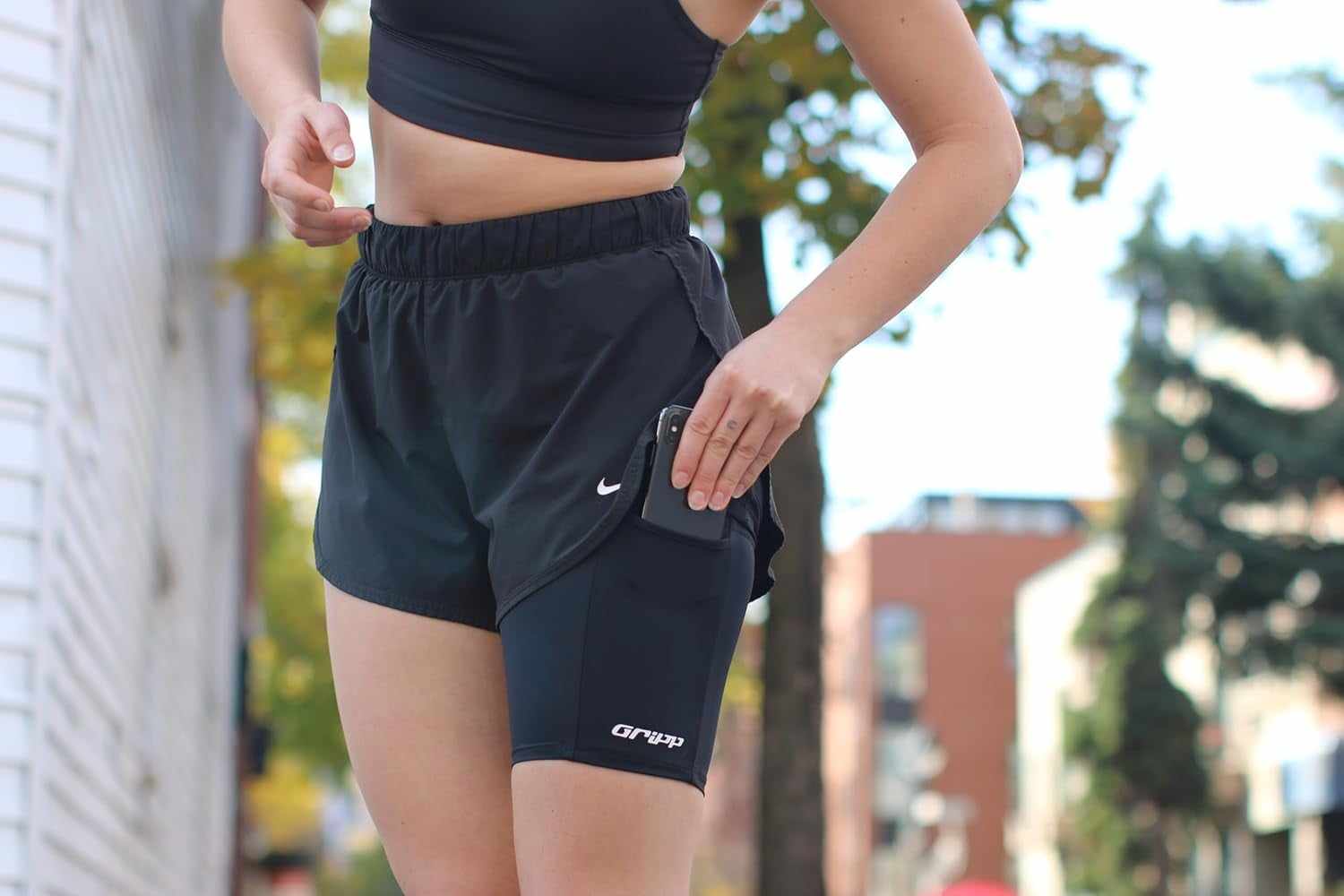
Quick answer: For a short trail run when you are carrying only a phone, start with a secure zip pocket or a close-fitting phone holder that keeps the phone flat against your body. A belt can work when you need room for one or two small extras. A hydration vest makes more sense when the load grows to include water, food, a layer or other trail gear. The word trail does not automatically mean you need a vest. Your total load does.
Whichever option you choose, test it with your actual phone, case and running clothes before heading onto the trail. Walk, jog, climb stairs and make a few high steps. If the phone shifts, the holder rolls or access feels awkward, adjust the setup or choose another category.
Choose by total load, not by the word trail
A short trail outing can mean very different things. One runner may carry only a phone. Another may add water, food, keys and a light layer. Those two loads should not be forced into the same holder.
| Carry option | Best fit | Main tradeoff |
|---|---|---|
| Secure zip pocket | Phone-only runs when the pocket is deep, snug and stable | The phone can pull or bounce if the clothing is loose |
| Close-fitting thigh holder | Phone-only runs when you want the load off your waistband | Phone-case fit, body sizing and clothing layers all matter |
| Running belt | Phone plus one or two small items | A loose or overloaded belt can move |
| Hydration vest | Phone plus water, food, layers or a larger trail load | More capacity and coverage than a phone-only run may need |
| Armband | Runners who like arm access and get a secure fit | Comfort and fit vary by arm, phone and case |
| Hand carry | Very short runs when you already know it feels comfortable | It keeps one hand occupied |
If you are still comparing holder categories, use our running phone holder comparison. If your outing includes water, food or a longer training load, the long-run phone carry guide is the better next step.
A simple phone-only setup for short trail runs
For a phone-only run, use the smallest setup that passes a movement test. A secure pocket is the simplest option when the phone stays flat and does not drag the waistband. If your shorts have no stable pocket, a close-fitting holder can keep the phone separate from the clothing.
Do not add capacity just because a product has it. Empty space can let items shift, while extra pockets often tempt you to carry more than you planned. Start with the phone. Add another category only when the load actually requires it.
When a hydration vest becomes the better category
A vest is not only a phone holder. It is a load-carrying system. Consider one when your run includes water, food, a layer or several items that need separate locations. It can also be the cleaner choice when you want the phone accessible without asking one small pocket to handle the full load.
For a short outing with only a phone, a vest may be more equipment than you need. For a longer or more gear-heavy outing, trying to make a phone-only holder carry everything is the worse compromise. Use the category that matches the load.
Do this four-step movement test before the trail
- Load the real phone and case. A thin case and a bulky case can change the fit.
- Move through trail-like positions. Walk, jog, climb stairs, step onto a bench-height surface and sit down.
- Check movement and access. The phone should not shift enough to distract you, and you should be able to reach it without fighting the holder.
- Repeat with your running clothes. A setup that works with one pair of shorts may feel different with another waistband or layer.
This test is more useful than a universal product claim because your phone, case, clothing and body fit are the variables that decide whether a setup works.
Where THIGHBAND fits
THIGHBAND is a phone-carry option for runners who want the load on the thigh instead of the arm or waist. It is most relevant here when the trail load is phone-only, the phone and case fit the pocket, and the band passes the movement test on bare skin under loose shorts.
It is not a hydration vest, and it should not be treated as storage for water, food, a key ring or a jacket. If you need to carry several items, choose a belt or vest with separate storage instead of forcing every object into one phone holder.
Frequently asked questions
Do I need a hydration vest for a short trail run?
Not automatically. If you are carrying only a phone, a secure pocket or close-fitting holder may be enough. A vest becomes more relevant when you add water, food, layers or several items that need separate storage.
Where should I put my phone if my trail shorts have no pockets?
Compare a close-fitting thigh holder, a small running belt and an armband. Choose the smallest option that fits your phone and case, stays in place during a movement test and gives you the access you want.
Is an armband good for trail running?
It can be if the fit is secure and comfortable for you. Test it with your actual phone and case, including high steps and arm movement. If it slips or needs repeated adjustment, compare a pocket, belt or thigh holder.
Can THIGHBAND carry my phone and keys?
Use THIGHBAND as the phone-carry layer. Keep a key or key fob in a separate secure location. If you need one holder for several items, a compartmented belt or vest is a better category.
How do I know whether my phone holder is ready for the trail?
Load the real phone and case, then walk, jog, climb stairs, take high steps and sit down. Repeat the test in your running clothes. If the phone shifts, the holder rolls or access is awkward, adjust it or switch options before the run.