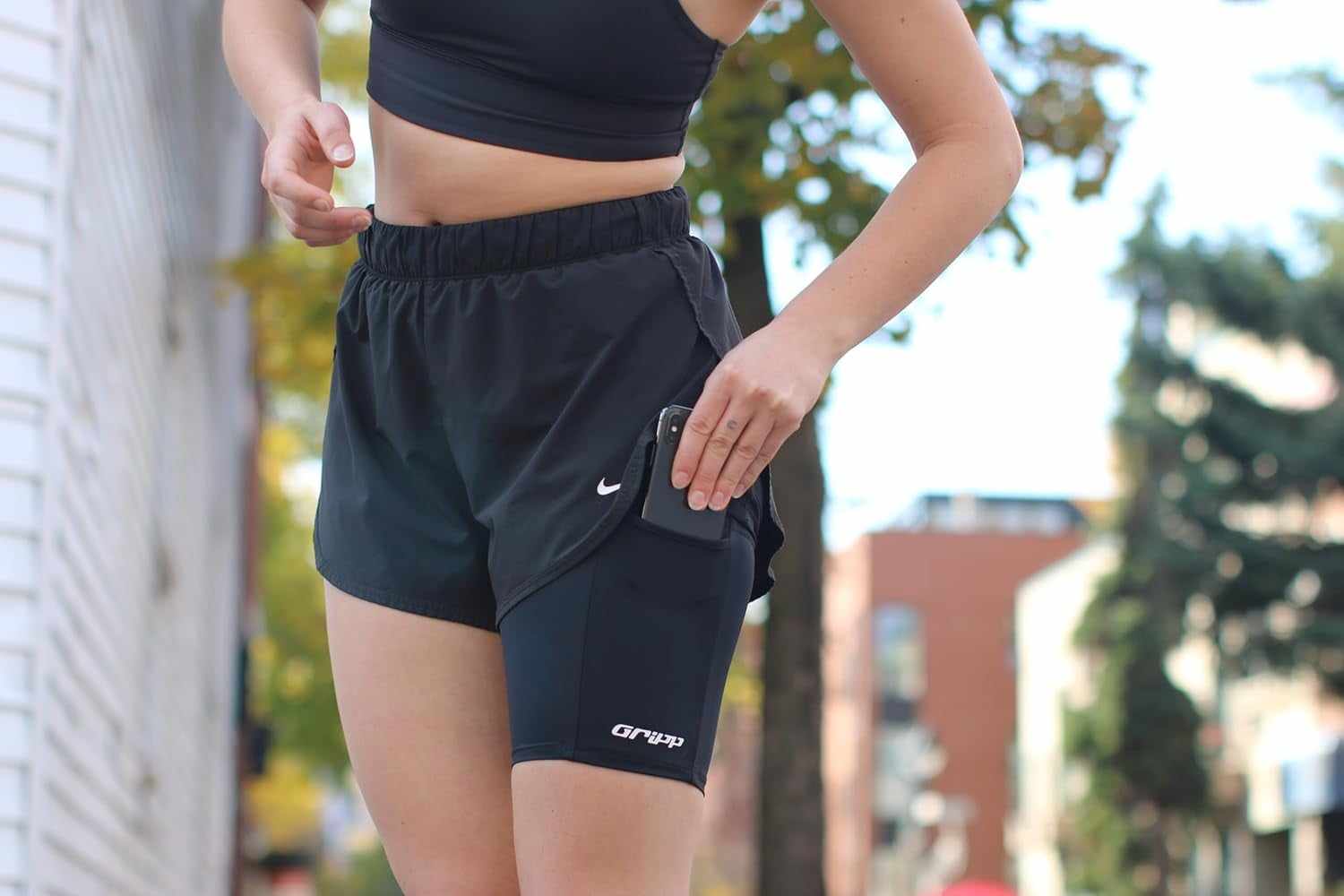
Quick answer: the best way to carry your phone on a long run depends on the full load. If you carry only a phone, start with a secure compression pocket or a phone-specific holder that fits your phone, case and body. If you also carry fuel, water, keys or a layer, use a belt or vest sized for those items instead of forcing everything into one phone pocket. Test the exact setup on training runs before using it for a race.
No single option works for every runner. Choose by three things: what you carry, how often you need the phone and whether the setup stays in the same position with your normal clothing.
Choose by the full load, not just the phone
| What you carry | Practical starting point | What to verify |
|---|---|---|
| Phone only | Secure compression pocket or phone-specific holder | Phone-plus-case fit, closure, body sizing and movement |
| Phone plus one small key or card | Two secure pockets or a small belt | Items do not press against the screen or move together |
| Phone plus fuel | Running belt or vest | Load stays distributed as items are used |
| Phone plus water or a layer | Hydration belt or running vest | Phone has a separate stable pocket and remains reachable |
How the main phone-carry options compare
Compression pocket
A snug side or back pocket can be the simplest option because it uses clothing you already own. Put the actual phone and case in the pocket, then walk, jog and run with the same shorts or tights planned for the long run. If the pocket stretches open, pulls the garment or lets the phone move, choose another setup.
Running belt
A belt makes sense when the phone is part of a small multi-item load. Keep the phone flat, reduce unused items and test where the belt sits with your planned clothing. If the belt moves, use the running-belt bounce checklist before replacing it.
Running vest
A vest is a practical choice when water, fuel or layers are already part of the run. Use a phone pocket that closes and holds the device without sharing space with items you need to remove often. Test access with the vest fully loaded, not empty.
Armband
An armband can work when the phone and case fit the pocket and the strap stays where you place it. Check access, closure and movement with the exact clothing layers planned for the run. If it slides or needs repeated adjustment, compare another position rather than tightening it without limit.
THIGHBAND for a phone-only load
The 800m THIGHBAND is a phone-specific option worn high on bare skin under loose shorts. It is most relevant when the phone is the main item. Check THIGHBAND sizing and phone-plus-case fit, then test it during movement. It is not designed to replace the storage of a belt or vest when you also carry water, several fuel items or layers.
A simple long-run setup test
- Pack the exact phone, case, keys, fuel, water and clothing planned for the run.
- Place each item in its intended pocket or holder.
- Walk, jog and run while checking movement, closure and access.
- Do a normal training run with the complete setup.
- Change only one variable at a time if something moves or becomes hard to reach.
For a broader comparison by load, clothing and access, use the practical phone-carry guide. If you also carry keys, the phone-and-keys guide helps separate the two items.
What changes on race day?
Use a setup already tested with the same expected load. Check the organizer's current rules for bags, hydration gear and phone use. If bag check or course support changes what you need to carry, adjust the load first, then choose the holder. Do not assume a training setup automatically matches the event.
FAQ
What is the best way to carry a phone on a long run?
For a phone-only load, start with a secure compression pocket or a phone-specific holder that passes your fit test. For a phone plus fuel, water, keys or layers, use a belt or vest that fits the complete load.
Should I use a running belt or vest for marathon training?
Use a belt for a smaller load and a vest when water, several fuel items or layers are part of the run. Test the phone pocket with the belt or vest fully packed.
Can THIGHBAND carry everything I need for a long run?
THIGHBAND is a phone-specific holder, not general storage for water, layers or several fuel items. It is most relevant when the phone is the main item and the phone-plus-case and body sizing checks pass.
Where should I put my keys during a long run?
Use a separate closed pocket or clip when possible. Keeping a key away from the phone screen can make access and packing simpler. Test the complete setup before the event.
Should I change my phone holder for race day?
Only if the race-day load or event rules are different. Use training runs to test any change with the exact clothing and items you plan to carry.