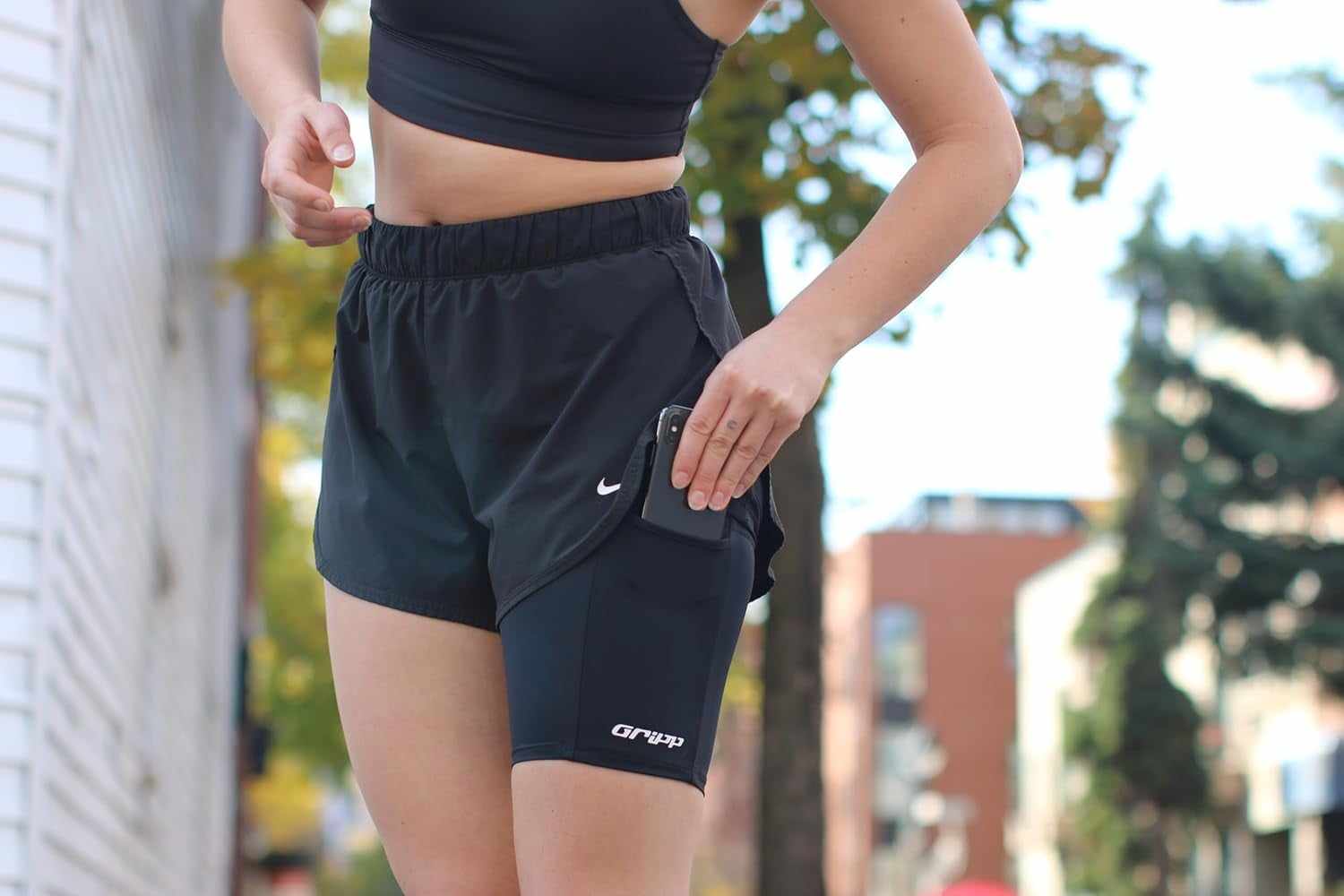
Quick answer: if you run with both a phone and an inhaler, give each item its own secure location. Put the inhaler where you can reach it without unloading the phone, and follow the storage and use instructions from your clinician, pharmacist, label, and manufacturer. A belt or vest is often the simplest choice when it provides separate compartments. If you prefer thigh carry for the phone, THIGHBAND can be considered for the phone only, leaving a separate pocket or compartment for the inhaler.
This is carry guidance, not medical advice. It does not decide whether you need an inhaler, when to use it, or how to use it.
Start with the access plan, not the holder
Before choosing gear, lay out the exact items you will take:
- the inhaler in the form you actually carry it;
- your phone with its usual case;
- keys, water, fuel, cards, headphones, or extra layers;
- the clothing you will wear during the run.
Then answer two practical questions. Does each important item have a secure location, and can you reach the inhaler without digging under the phone or emptying the rest of the load?
For a broader phone-carry framework, see the practical running phone guide.
Choose a setup with separate secure locations
| Setup | Best match | What to verify |
|---|---|---|
| Two secure clothing pockets | Phone and inhaler each fit without sharing one pocket | Pocket closure, access through layers, and movement |
| Running belt with separate compartments | Two small items plus a key or card | Exact item fit, compartment access, and belt movement |
| Running vest | Phone and inhaler plus water, fuel, or layers | Separate pockets, closure, load balance, and access |
| Phone in THIGHBAND plus a separate inhaler location | Phone-only thigh carry when another secure pocket or compartment is available | Phone-case fit, thigh size, bare-skin grip, and inhaler access elsewhere |
| One overfilled pocket | Not recommended as the default plan | Whether either item becomes harder to reach or control |
If the run also requires water or fuel, the long-run phone-carry guide explains why total load often points toward a belt or vest.
Keep the phone and inhaler as two separate carry decisions
A phone holder is not automatically an inhaler holder. The two items can have different shapes, access needs, and instructions. Stacking them in one small pocket can also make either item harder to retrieve.
Use the same principle as carrying a phone and keys: assign each item a secure place before the run. The phone-and-keys guide shows how this separate-location approach works for another two-item load.
When THIGHBAND can help with the phone
The 800m THIGHBAND is a phone holder designed to sit high on the thigh. This article does not claim that it fits, holds, or protects an inhaler.
THIGHBAND can be one phone-only branch when moving the phone to the thigh leaves a separate secure location for the inhaler. Check body fit with the 800m sizing guide, test the phone with its case, and remember that the silicone band is designed to grip bare skin, not leggings.
If you do not have a separate inhaler location, choose a different overall setup. The goal is not to force every load into a phone-only holder.
Run a five-minute carry rehearsal
- Pack the exact phone, case, inhaler, clothing, and extra items you plan to use.
- Walk, jog, raise your knees, and move through the layers you will wear.
- Confirm that you can reach the inhaler without unloading or searching behind the phone.
- Replace each item and repeat the access motion without changing your medication routine.
- If the setup is crowded or confusing, move to a simpler pocket, belt, or vest arrangement.
A carry rehearsal checks access and movement only. Questions about medication use, storage conditions, or your asthma plan belong with your clinician, pharmacist, label, or manufacturer.
Common setup mistakes
- Assuming a phone pocket has verified inhaler fit.
- Putting both items in one crowded pocket without testing access.
- Burying an important item under water, fuel, keys, or clothing layers.
- Testing the phone without its usual case.
- Choosing a phone-only holder when the full load needs a belt or vest.
- Turning a carry article into advice about when or how to use medication.
FAQ
Where should I carry an inhaler while running?
Use a secure location you can reach without unloading other items, and follow the storage and use instructions for your specific inhaler. A closed pocket, separate belt compartment, or vest pocket may work if the exact item fits and remains accessible.
Can I carry a phone and inhaler in the same running belt?
Yes, if the belt gives them separate secure spaces and you can reach the inhaler without removing the phone. Test the exact items and clothing before the run.
Can THIGHBAND hold an inhaler?
Inhaler fit has not been verified. THIGHBAND is presented here only as a phone holder. Use a separate location that matches the instructions and dimensions of your inhaler.
What if I also carry water, fuel, or keys?
A running vest or larger belt usually matches the load better because it can provide more separate locations. Do not force several items into a phone-only setup.
Should I carry an inhaler on every run?
This gear guide cannot answer that. Follow the plan from your clinician or pharmacist and the instructions for your medication. The article only helps organize the items you have already been told to carry.
Bottom line: give the phone and inhaler separate secure locations, rehearse access with the exact load, and use a belt or vest when that is the simpler setup. THIGHBAND is one conditional phone-only option, not an inhaler holder or a universal answer.