If your running belt chafes, first reduce friction, weight and movement. Wear it over smooth fabric or skin that does not fold under the belt, tighten it only enough that it moves with you, remove extra items, and move the buckle or phone away from the rubbing spot. If the belt still rubs after a short test run, do not force it for a long run. Switch the carry position or use a different holder.
Most belt chafing is not mysterious. It usually comes from three things at once: a strap edge rubbing the same spot, sweat making skin easier to irritate, and a phone or bottle making the belt bounce or shift. Fix the movement first. Then fix the friction.
Quick fixes to try before replacing the belt
- Lighten the load. Carry only the phone or only the essentials for one test run. Extra weight makes the belt move more.
- Flatten the phone. A phone sticking out from the waist can make the belt twist and rub.
- Move the rubbing point. Shift the buckle, seam or phone pocket away from the irritated spot.
- Check the layer under the belt. Thick waistbands, folded shirts and loose fabric can create a rubbing ridge.
- Use an anti-chafe balm if you already tolerate one. Put it on the spot that rubs before the run.
- Stop the test early if the skin starts to sting. A small hot spot can turn into a bad run fast. Very heroic. Also avoidable.
Why running belts chafe
The belt moves separately from your body
A belt should move with you. If it bounces, rides up or slides side to side, the edge rubs the same skin again and again. The phone often makes this worse because it adds weight to one pocket.
If bounce is the main problem, read the 800m guide on why running belts bounce with phones.
Sweat turns small friction into a bigger problem
Dry friction is annoying. Sweat makes it more noticeable because fabric and skin slide differently once they are wet. Long runs, heat and salt can make a belt that felt fine for 20 minutes feel rough after 60 minutes.
The belt carries more than it should
A belt can be great when you carry gels, keys, cards or soft flasks. But if you only carry a phone, the belt may be more gear than you need. Extra storage can become extra movement. Tiny lesson in product strategy, apparently useful on a run too.
When a running belt still makes sense
Keep the belt if you need storage and can make it quiet. For long runs, race fueling, keys, cards or a small bottle, a belt can still be the right tool. The goal is not to declare belts bad. The goal is to stop using one when the belt is solving yesterday's problem and creating today's.
| Situation | Try this | Why |
|---|---|---|
| Belt rubs at one seam or buckle | Move the belt position or rotate the buckle | The same hard point may be hitting the same skin |
| Belt chafes only on long runs | Use less weight, smoother fabric and anti-chafe balm | Time, sweat and repetition expose small fit issues |
| Belt chafes and bounces with a phone | Flatten the phone, tighten gently or move the phone off the waist | Movement drives friction |
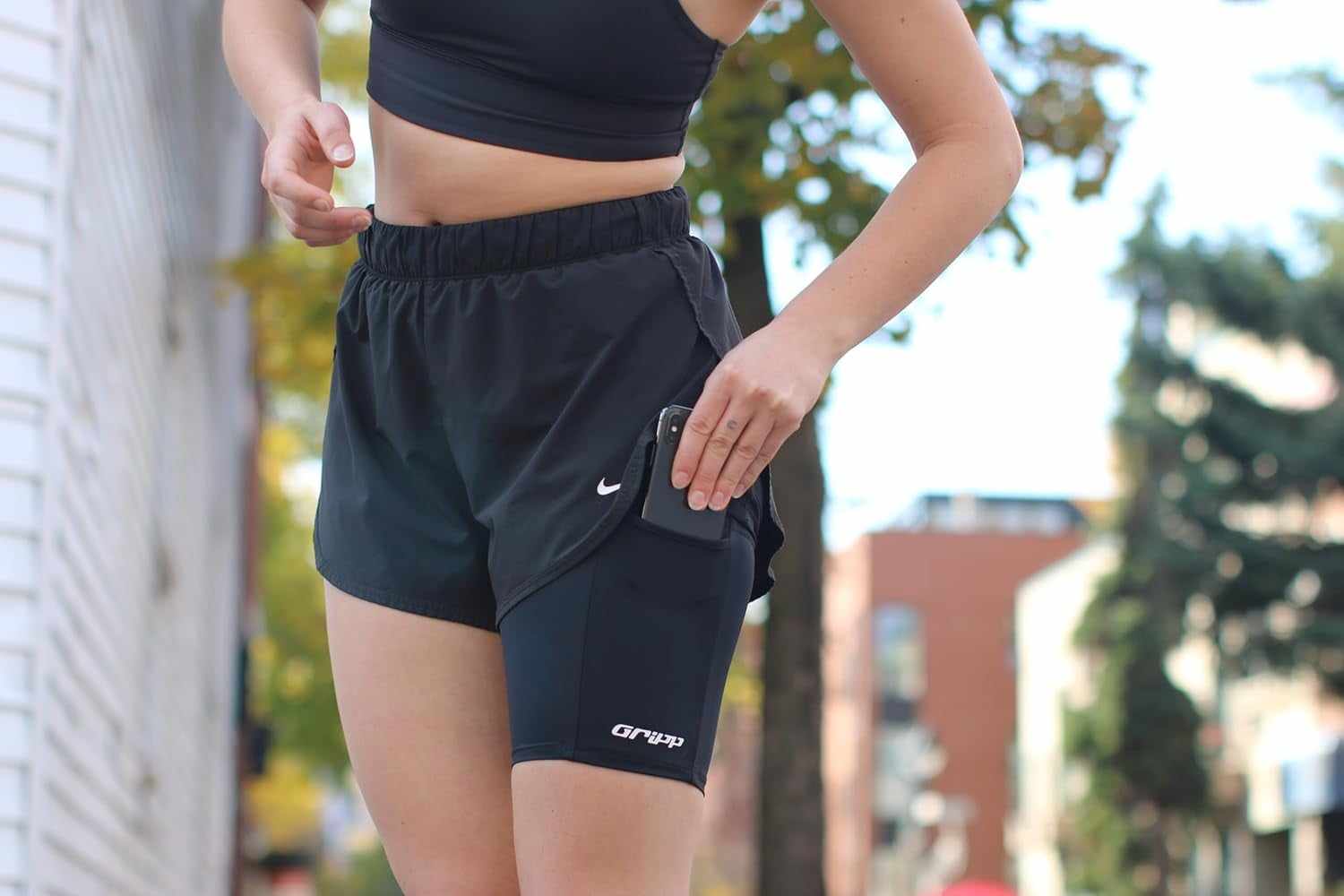
| You only carry your phone | Try a thigh holder or secure compression pocket | You may not need waist storage |
| You carry gels, keys and cards | Keep a belt, but spread the load | The storage is useful if the load stays balanced |
When to switch away from the belt
Switch away if the belt keeps rubbing after you adjust position, reduce weight and test a smoother setup. Also switch if you are only carrying a phone and the belt feels like too much fabric around the waist.
A thigh phone holder can help when the belt problem is waist friction from phone-only carry. The 800m THIGHBAND carries the phone high on the thigh instead of around the waist. It is most useful when you want your phone off your waistband, out of your hand and away from your arm. It works best worn directly on bare skin.
If you are comparing all options, see the 800m guide to the best phone holders for running. For the broader phone placement logic, read how to carry your phone while running.
What not to do
- Do not just tighten harder. A belt that only works when it feels harsh is not a good fit.
- Do not overload the pouch because it has room. Capacity and comfort are not the same thing.
- Do not ignore a hot spot. Stop, adjust and shorten the test if rubbing starts early.
- Do not copy another runner's setup blindly. Waist shape, shorts fabric and what you carry all change the answer.
FAQ
How do I stop a running belt from chafing?
Reduce movement first. Carry less weight, keep the phone flat, move seams or buckles away from the sore spot, and use a smooth clothing layer or anti-chafe balm if that works for you.
Should a running belt be tight?
It should be snug enough to move with your body, but not so tight that it feels sharp or distracting. If it needs to be painfully tight to stay put, the fit or load is probably wrong.
Why does my running belt rub only on long runs?
Long runs add sweat and repetition. A small amount of movement that feels fine for 20 minutes can become irritating after an hour.
Is a thigh holder better if my running belt chafes?
It can be better if you only carry your phone and the waist belt is the source of rubbing. If you need gels, keys or bottles, a belt may still be better because it gives you more storage.
Can anti-chafe balm fix belt rubbing?
It can help reduce friction, but it does not fix a belt that is bouncing, overloaded or rubbing because of a hard seam. Treat balm as one tool, not the whole solution.
When should I stop using a belt on a run?
Stop or shorten the run if the belt starts to sting, scrape or distract you early. Adjust the setup before your next longer run instead of trying to tough it out.
Sources
- Quora, best way to prevent chafing when wearing a running belt: https://www.quora.com/What-s-the-best-way-to-prevent-chafing-when-wearing-a-running-belt
- Reddit r/XXRunning, running belt chafing: https://www.reddit.com/r/XXRunning/comments/scd1dc/running_belt_chafing/
- Reddit r/running, avoiding chafe, blister, rub or sore spots with a loaded SPIbelt: https://www.reddit.com/r/running/comments/gcdfmy/whats_the_best_way_to_avoid_chafeblisterrubsore/
- Reddit r/trailrunning, running belt review with fit issues: https://www.reddit.com/r/trailrunning/comments/1u0ew3y/raide_2l_running_belt_review_after_1st_run_great/
- Reddit r/Marathon_Training, running belt versus vest: https://www.reddit.com/r/Marathon_Training/comments/1cj6oba/running_belt_vs_vest/