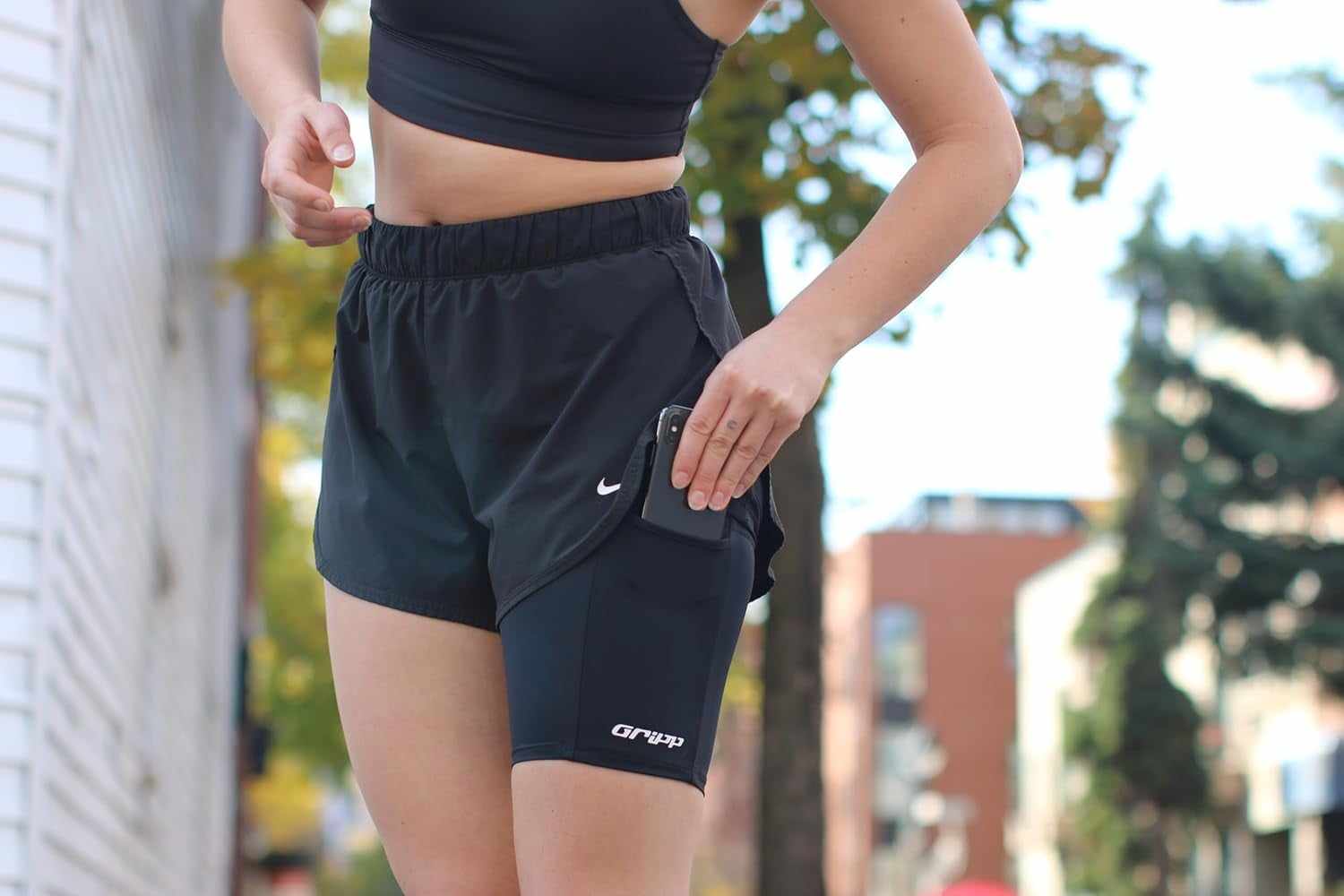
Quick answer: there is no single best phone holder for every run. Choose by what you carry and what you wear. If you carry a phone plus keys, gels or cards, start with a running belt. If you carry only a phone, compare a snug clothing pocket with a thigh holder. An armband can work if you like upper-arm access and the fit stays comfortable. A handheld grip is the simplest option, but it keeps one hand occupied.
For a phone-only setup, the 800m THIGHBAND is one option to compare. It is designed to sit high on bare skin, usually under compatible loose shorts. It is not designed to grip over leggings, and you should check your phone and case against the pocket before deciding.
Running phone holders compared
| Option | Best starting point when | Main tradeoff to check |
|---|---|---|
| Thigh phone holder | You carry mainly a phone and can wear the holder on bare skin | Check phone-case fit, skin comfort and clothing compatibility |
| Running belt | You need one place for a phone, keys, cards or gels | Load and fit can make some belts shift or bounce |
| Armband | You prefer the phone on your upper arm and want quick access | Check tightness, slipping and phone size before a long run |
| Compression pocket | Your running shorts or tights already have a deep, snug pocket | The phone can pull or move if the pocket is loose |
| Handheld grip | You want immediate access and do not mind using one hand | Your hand remains occupied for the run |
A two-minute decision guide
1. List the full load
Do not choose a holder for an imaginary phone-only run if you always bring a car key, cards, gels or a soft flask. A belt gives you shared storage. A thigh holder or clothing pocket makes more sense when the phone is the main item.
2. Check the phone with its real case
Measure and test the phone with the case you actually use. Pocket opening, depth and closure matter separately from the holder's body size. A product described for modern phones is not a guarantee that every unusually bulky case will fit. Use the large-phone fit checklist before buying.
3. Match the holder to your clothing
A compression pocket depends on the garment. A belt sits at the waist. An armband needs a secure upper-arm fit. THIGHBAND depends on bare-skin contact and is not designed to grip over leggings. If you are considering a thigh holder, read the guide to wearing a running phone holder under or over shorts.
4. Test access without rushing
Can you reach the phone, unlock it and put it back without fighting the closure? Try that at home first. Easy access matters if you regularly check maps, audio or run tracking. If you rarely touch the phone, a deeper storage position may be fine.
5. Do a short movement test
Walk, jog, climb stairs and sit down. Check for shifting, pressure, fabric pull and awkward access. A two-minute test will not predict every run, but it can expose an obvious mismatch before you commit to a longer outing.
When is a running belt the better choice?
Choose a running belt when you need shared storage. It is the clearest starting point for a phone plus keys, cards, gels or other small items. The tradeoff is that fit and load distribution matter. A heavy item in a loose pocket can move differently from a flat, centered load.
If you already own a belt, test it before replacing it. Reduce unnecessary items, place the phone flat and adjust the belt according to its instructions. If it still moves in a way you dislike, the running-belt bounce guide separates setup problems from category tradeoffs. If you always bring a phone and keys, use the phone-and-keys decision guide.
When does an armband make sense?
An armband keeps the phone on the upper arm and can provide quick access without using a waistband. It can be a reasonable choice when the phone fits the sleeve, the strap stays in place and the pressure feels acceptable to you.
Check the adjustment range and your phone-case size. If you must keep tightening the strap, if it slips, or if the phone feels awkward on the arm, compare another category instead of assuming every armband will behave the same way.
When is a clothing pocket enough?
A built-in pocket is the lowest-gear option because you already own it. The useful version is deep, snug and designed to keep the phone contained while you move. Loose casual pockets and shallow openings are a different situation.
Test the exact garment with your phone. If your shorts have no suitable pocket, compare the options in Where to Put Your Phone When Running Shorts Have No Pockets.
When should you compare a thigh phone holder?
A thigh holder is worth comparing when the phone is your main item and you do not want it at your waist, upper arm or in your hand. Fit still matters. Check the holder's body sizing, the phone pocket, the closure and how it works with your shorts.
The 800m THIGHBAND is designed to sit high on bare skin. It can be worn under compatible loose shorts for access without using a waistband. It is not designed to grip over leggings. If you need hydration, several gels and extra layers, a belt or vest may match the full load better.
What about carrying the phone in your hand?
A handheld grip is simple and keeps the screen close. It also occupies one hand. That tradeoff may be acceptable for a short run or occasional use. If you repeatedly wish both hands were free, compare a pocket, belt, armband or thigh holder.
Choose by the run you actually do
- Phone only, bare-skin thigh setup works: compare a snug pocket and a thigh holder.
- Phone plus keys or gels: start with a running belt or split the items between secure pockets.
- Large phone or bulky case: check pocket opening, depth and closure before choosing a category.
- No pockets in your shorts: compare a belt, armband, thigh holder or handheld grip.
- Long run with hydration or several items: choose for the full load, not just the phone. See the long-run phone-carry guide.
Pre-buy checklist
- What items do you bring on most runs?
- What are the phone and case dimensions?
- Does the pocket close around that exact setup?
- Will the holder work with your usual shorts, tights or layers?
- Can you access and replace the phone without stopping?
- Can you return the holder if the fit is wrong?
Bottom line
The best phone holder for running is the one that matches your actual load and clothing. Choose a belt for shared storage, an armband for upper-arm access, a snug clothing pocket when the garment already solves the problem, or a thigh holder for a phone-focused bare-skin setup. Use a handheld grip when keeping one hand occupied is an acceptable tradeoff.
Phone-only setup? If the bare-skin thigh setup fits your clothing, check the 800m THIGHBAND sizing and phone-plus-case fit before deciding. If you carry water, fuel, keys or layers, choose a belt or vest that fits the full load instead.
FAQ
What is the best phone holder for running?
There is no universal winner. Start with your load. A running belt suits a phone plus small items. A snug clothing pocket can be enough when the garment is designed for it. A thigh holder is worth comparing for a phone-focused bare-skin setup. An armband suits runners who prefer upper-arm access.
Is a running belt or armband better for a phone?
A running belt is usually the better starting point when you carry a phone plus keys, cards or gels. An armband keeps the phone on the upper arm and may suit a lighter load. Check movement, pressure, access and phone-case fit for either option.
What should I look for in a running phone holder?
Check the full load, phone-case dimensions, pocket closure, body fit, clothing compatibility, access and return policy. Test the holder with a walk, jog, stairs and sitting before using it for a longer run.
Will a running phone holder fit a large phone with a case?
Not automatically. Check pocket opening, depth and closure with the phone's real case. Holder body sizing and phone-pocket sizing are separate questions.
Can I wear the 800m THIGHBAND over leggings?
It is designed to grip bare skin and is not designed to hold over leggings. If you run in tights, use a secure built-in pocket or another holder category that matches that clothing setup.