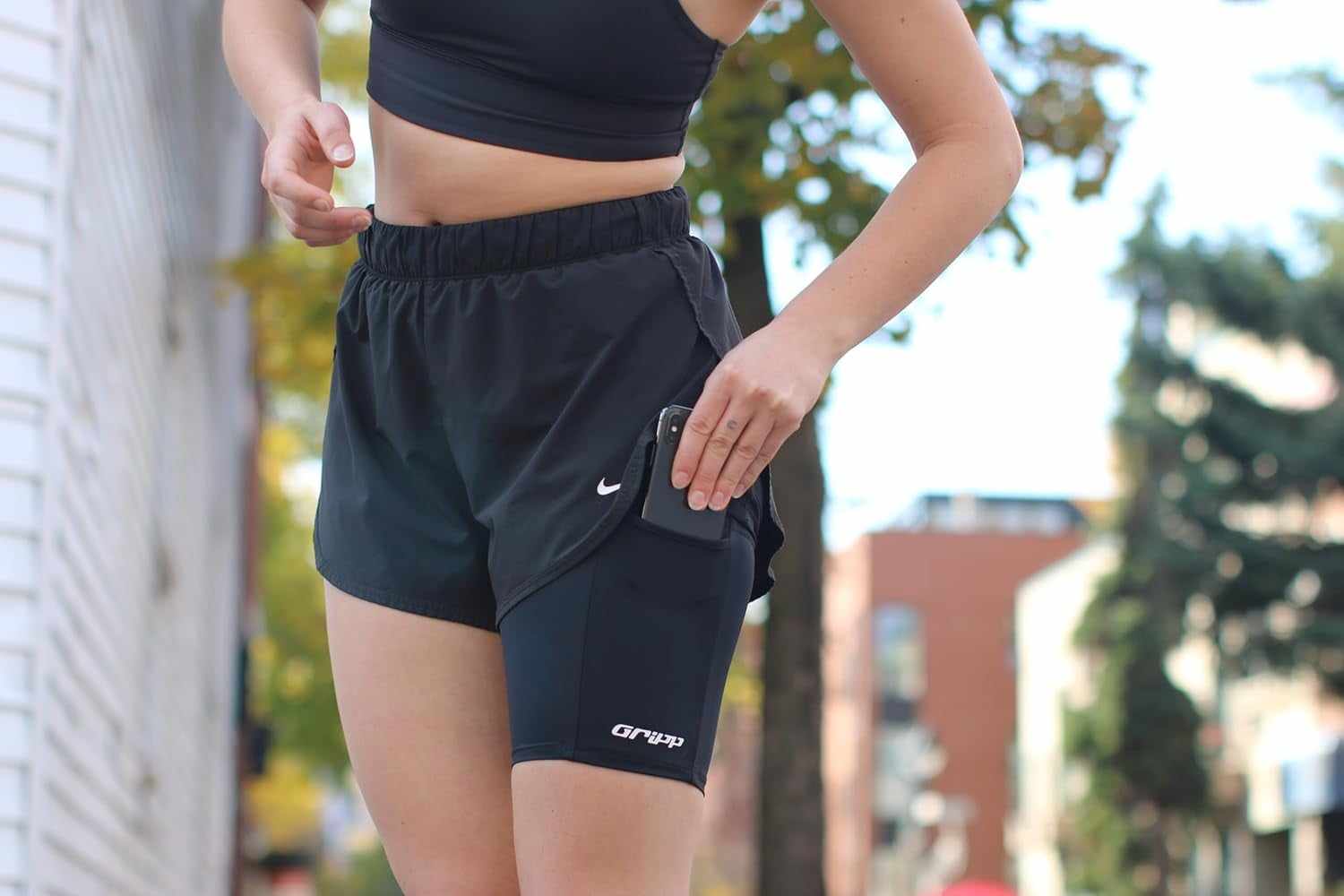
Quick answer: if you run with a CGM and need your phone or receiver nearby, carry it somewhere secure, easy to reach and stable enough that you are not fighting bounce the whole run. A tight hand grip works for a short emergency run, but it is not a great regular system. Shorts pockets work only if they hold the phone flat. Belts and vests work when you need extra storage. A thigh phone holder can work well when you mainly need phone access without putting the phone on your arm, waist or chest.
This guide is about carrying the phone or receiver you use to view CGM readings. It is not medical advice and it does not replace your device manual, clinician guidance or diabetes care plan. Keep following the instructions for your CGM, sensor placement, alerts and treatment decisions. The gear question is simpler: where can the device sit so you can run normally and still get to it when you need it?
Why CGM runners care so much about phone placement
For many runners, a phone is just music, maps and emergency contact. For a runner using a CGM, the phone or receiver can also be the screen for glucose readings and alerts. That changes the job of the carry setup.
The best setup usually has four traits:
- It stays close enough for your device setup. Check your CGM brand instructions for how phone or receiver distance works.
- It is easy to reach. If you need to look at the screen, you should not have to stop and unpack your whole waist belt.
- It does not bounce. Bounce is annoying for any phone. It is worse when you keep checking whether the device is still where you put it.
- It does not rub a sensor site or medical gear. Avoid routing straps, waistbands or tight storage over areas your clinician or device instructions tell you to protect.
Best places to carry a phone or receiver while running with a CGM
1. A secure shorts or tights pocket
A built in side pocket can be the simplest option if it is deep, snug and easy to access. It works best when the pocket holds the phone flat against the leg instead of letting it swing from the hip.
Use this option when your shorts or tights already have a stable phone pocket. Skip it if the phone pulls the waistband down, bounces, or sits so deep that checking it becomes a two hand project.
2. A running belt
A belt can make sense when you need more than a phone: keys, gel, cards, medical supplies, or a small receiver. The tradeoff is access. Some belts hold gear tightly, which is good for bounce, but annoying if you need to glance at the screen often.
If you choose a belt, test where it sits before a harder workout. The belt should not rub, ride up or cross over anything you need to keep comfortable. If it bounces with only a phone inside, the fit or load placement is probably wrong.
3. A running vest
A vest is usually overkill for a short run, but useful for long runs, trail days or races where you already carry water and supplies. It gives you multiple pockets, which can help you separate the phone, receiver and other items.
The downside is heat, bulk and straps. If you use a vest, choose a pocket you can reach without taking the vest off.
4. Hand carry
Holding the phone in your hand is the fastest answer and the worst long term habit for many runners. It is accessible, but it can change your arm swing, increase grip tension and make the phone easier to drop.
Use hand carry as a backup, not as your default for every run.
5. A thigh phone holder
A thigh phone holder can be useful when you mainly need the phone, not a whole storage system. It keeps the phone off your waist, arm and chest while still making it reachable during the run.
The 800m THIGHBAND is built for carrying a phone on the thigh during running. For a CGM runner, the practical benefit is not medical. It is access and stability: your phone has a dedicated spot, and you are not relying on a loose pocket or a hand grip. Before using any holder, make sure it does not interfere with your CGM sensor location or other medical gear.
Quick comparison
| Carry option | Best for | Main tradeoff |
|---|---|---|
| Shorts or tights pocket | Runners with a deep, stable pocket | Can bounce or pull if the pocket is loose |
| Running belt | Phone plus keys, gel or small supplies | Can be harder to access quickly |
| Running vest | Long runs, trail runs or races with more gear | More bulk and straps |
| Hand carry | Short backup use | Grip tension and drop risk |
| Thigh holder | Phone first, stable access, no waist storage needed | Needs correct sizing and placement |
A simple test before you trust the setup
Do not test a new carry method for the first time during a race or a hard long run. Try this instead:
- Put the phone or receiver where you plan to carry it.
- Walk for two minutes and check for rubbing or slipping.
- Jog for five minutes and notice bounce.
- Practice checking the screen once or twice without stopping.
- After the run, check whether the setup left pressure marks or rubbed any sensitive area.
If the carry method works only when you constantly adjust it, it does not work. Tiny detail, apparently important.
When to choose THIGHBAND instead of a belt
Choose a belt when you need storage. Choose a vest when you need water and more gear. Consider THIGHBAND when the job is mostly phone access and you want the phone to stay off your hand, arm, chest and waistband.
If your current problem is that your shorts have no pocket, this guide on where to put your phone when running shorts have no pockets may help. If you are still comparing all phone carry styles, start with the broader best phone holders for running guide.
FAQ
Can I run with a CGM and keep my phone in a holder?
Many runners use a phone or receiver while running with a CGM, but your device instructions matter. This article only covers carrying the phone or receiver. Follow your CGM manual and clinician guidance for sensor use, alerts, readings and treatment decisions.
Does a phone need to stay close to a CGM sensor while running?
That depends on your CGM system, phone, receiver and app setup. Check your manufacturer instructions for connection range and alert behavior. From a gear perspective, choose a carry spot that keeps the phone secure and reachable.
Is a running belt good for carrying a CGM receiver?
It can be, especially if you also carry keys, fuel or supplies. The downside is access. If you need to check the screen often, make sure the belt pocket opens easily while running.
Is a thigh phone holder better than holding the phone?
For regular runs, usually yes if it fits you well. Hand carry is simple, but it can affect arm swing and grip comfort. A thigh holder gives the phone a dedicated place without needing a waistband pocket.
Can THIGHBAND protect a CGM sensor?
No. THIGHBAND is a phone holder, not CGM protection and not medical equipment. Use it only for phone carry, and make sure it does not interfere with your sensor location or other medical gear.