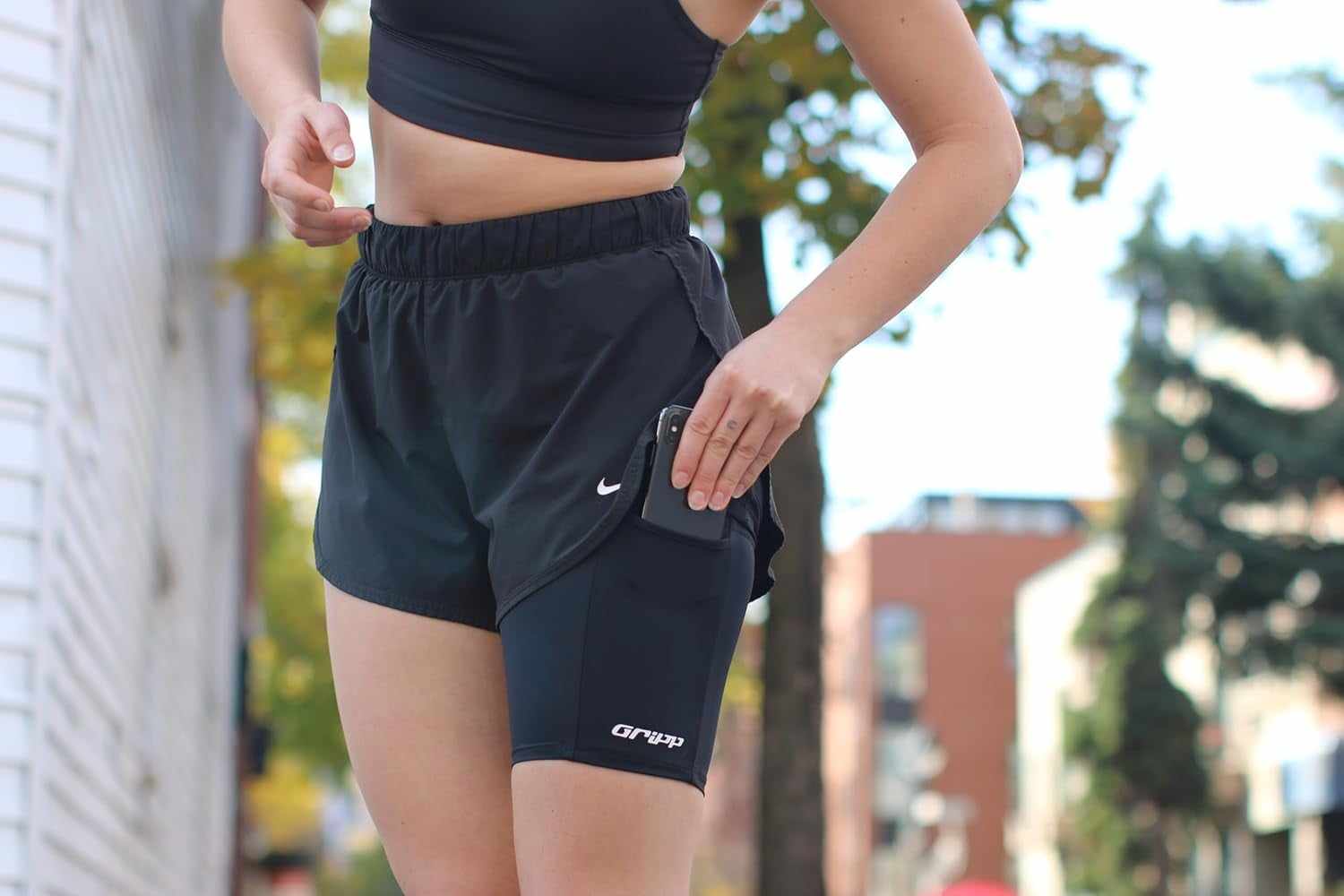
Short answer: carry your phone on race day only if you need it during the event or immediately after the finish. If you do not need it on the course, leaving it at home or using the organizer's bag drop can remove one item from your race setup. If you do carry it, use the smallest secure option that fits the actual phone and case, works with your race clothing and has already passed a training-run test.
Check the event's current rules, phone-use policy and bag-drop details before deciding. A setup that works during training may not match the event's logistics.
Choose between three race-day options
| Option | Useful when | What to confirm |
|---|---|---|
| Leave the phone behind | You do not need it during the event or after the finish | Your transport, meeting point and post-race plan work without it |
| Use the event's bag drop | You want the phone before and after the race, but not on the course | The organizer offers bag drop, the current rules allow the item and the pickup plan fits your day |
| Carry the phone | You need it for an allowed function during the race or want it immediately at the finish | The phone, case, clothing and holder stay secure in a full race-pace test |
Decide what the phone must do during the event
Write down the function before choosing the carrier. You may want the phone for audio, an allowed tracking app, contact after the finish or directions away from the venue. If a watch or the event's support already covers the function you need, the phone may be optional.
This first decision matters because a phone-only load can use a smaller setup than a phone packed with keys, cards, fuel, water or a layer. If the phone is only one part of a larger load, use the long-run and marathon-training carry guide to choose for everything you need.
Compare phone-only carry options
Secure clothing pocket
A snug zipped pocket can be the simplest choice because it uses clothing you already own. Test the exact phone and case with the shorts, tights or top planned for the race. If the pocket pulls the clothing, opens during movement or lets the phone move, use another setup.
Running belt
A small belt can carry a phone and a few compact items. Load it exactly as planned, remove anything unnecessary and check that it stays in the same position through easy running, turns and race-pace efforts.
Running vest
A vest makes more sense when the phone is part of a larger load that includes water, fuel or a layer. Use a closed phone pocket and test the vest fully loaded. An empty-vest test does not show how the race-day load will move.
Armband
An armband can work for a phone-only setup when the phone and case fit the pocket and the strap stays where placed. Test access and movement with the same clothing layers planned for the event.
Phone-only thigh holder
A thigh holder can keep the phone away from the waistband. It still needs correct body sizing, phone-plus-case fit and compatible clothing. Test it during normal running and faster efforts before race day.
Run a complete pre-race test
- Pack the exact phone, case and other items you plan to carry.
- Wear the same shorts, tights, top and outer layers planned for the event.
- Close every zipper, flap or clip.
- Walk, jog, turn and run at planned race effort.
- Reach for the phone once, then put it back while stopped.
- Complete at least one normal training run with the full setup.
- Check the organizer's current rules and bag-drop details before the event.
If the phone moves, the clothing shifts or the holder needs repeated adjustment, change the setup before race morning. Do not make the first full test at the start line.
Where THIGHBAND fits
The 800m THIGHBAND is relevant when you decide to carry a phone-only load, want the phone off your waistband and plan to wear compatible loose shorts. It is worn high on bare thigh skin, not over leggings. Check body sizing and the actual phone-plus-case fit, then test it during training.
THIGHBAND is not general storage for water, fuel, keys, cards or layers. If those items are part of the race-day load, choose a carrier designed for the complete load. For a broader comparison, use the practical phone-carry guide.
Frequently asked questions
Should you carry your phone during a race?
Carry it if you need it during the event or immediately after the finish and the organizer's current rules allow your planned use. Otherwise, leaving it behind or using bag drop can simplify the load.
Is bag drop better than carrying a phone?
Bag drop is useful when you want the phone before and after the race but not on the course. Confirm that the event offers it, accepts the item and has a pickup process that fits your plan.
Where should you put your phone on race day?
Use the smallest secure option that fits the phone, case, clothing and total load. A zipped pocket or phone-specific holder can work for a phone-only load. A belt or vest is more practical when you also carry other items.
Should you try a new phone holder on race day?
No. Test the exact holder, phone, case, clothing and load during training first. A short movement check and a normal training run can expose movement, access or fit problems before the event.
Can THIGHBAND hold all your race gear?
No. THIGHBAND is a phone-specific holder. Use separate secure storage or a carrier with suitable capacity for keys, cards, fuel, water or layers.